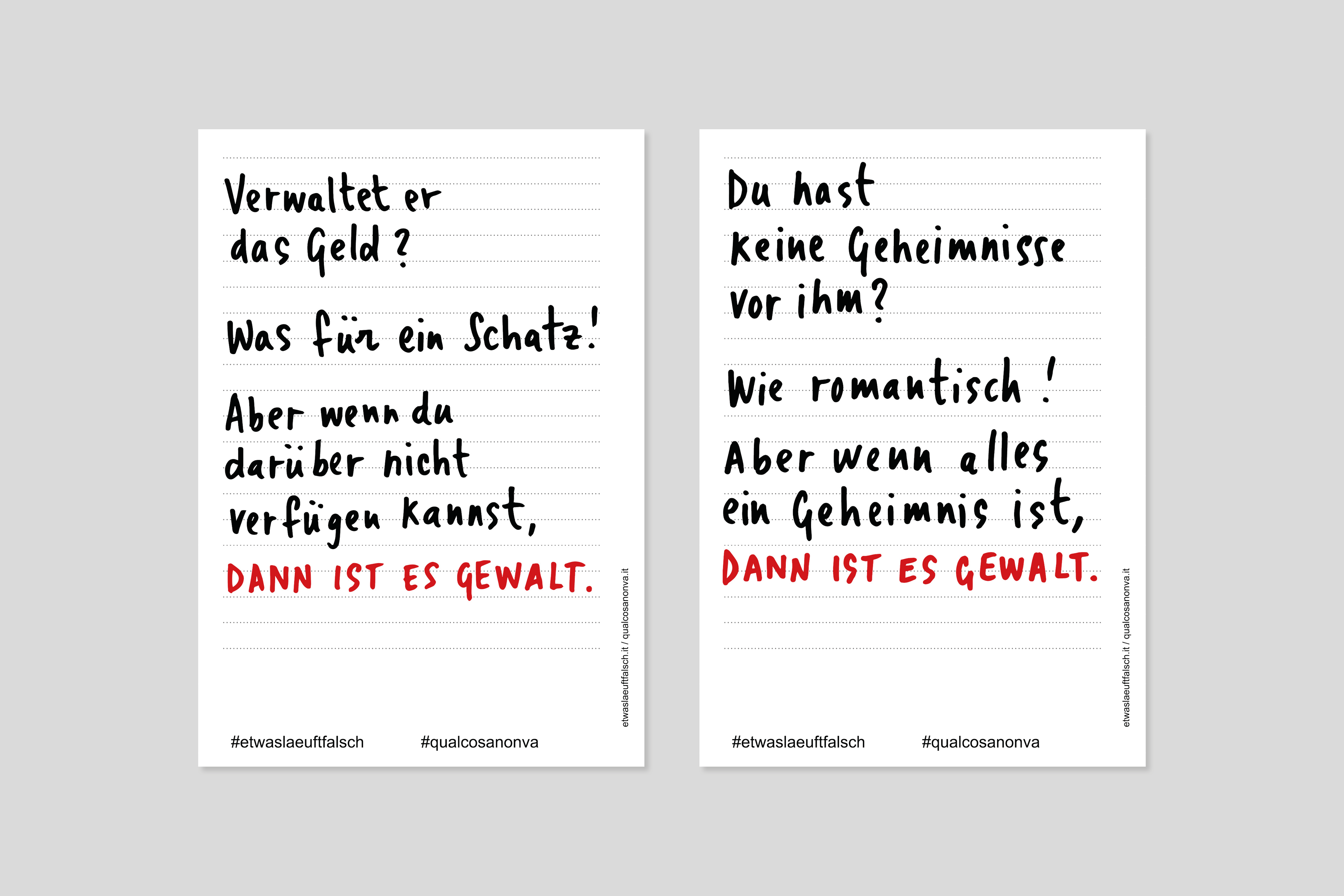
A poster campaign designed by artists, authors and illustrators that deals with the issue of violence against women in an artistic and literary-poetic way.
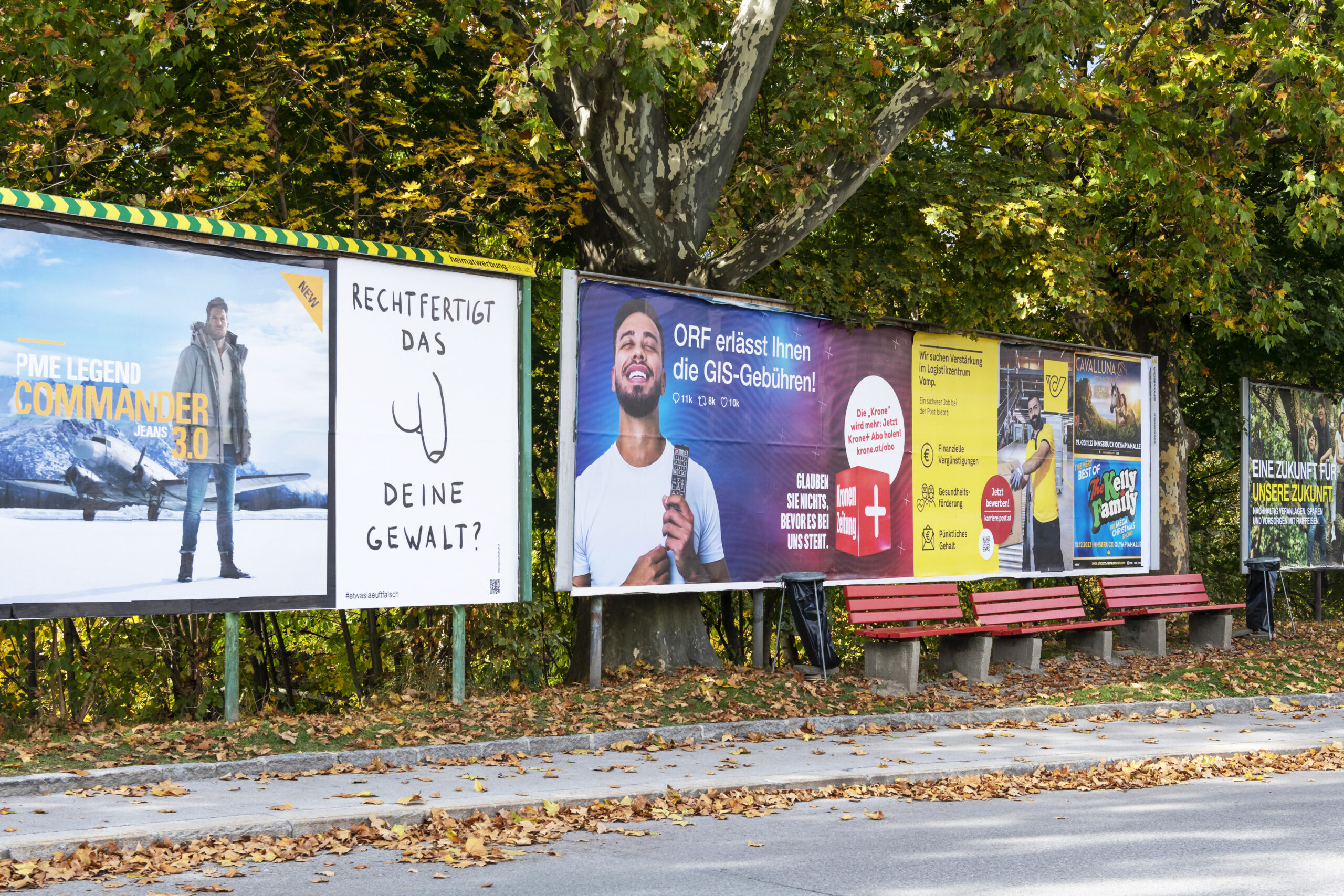
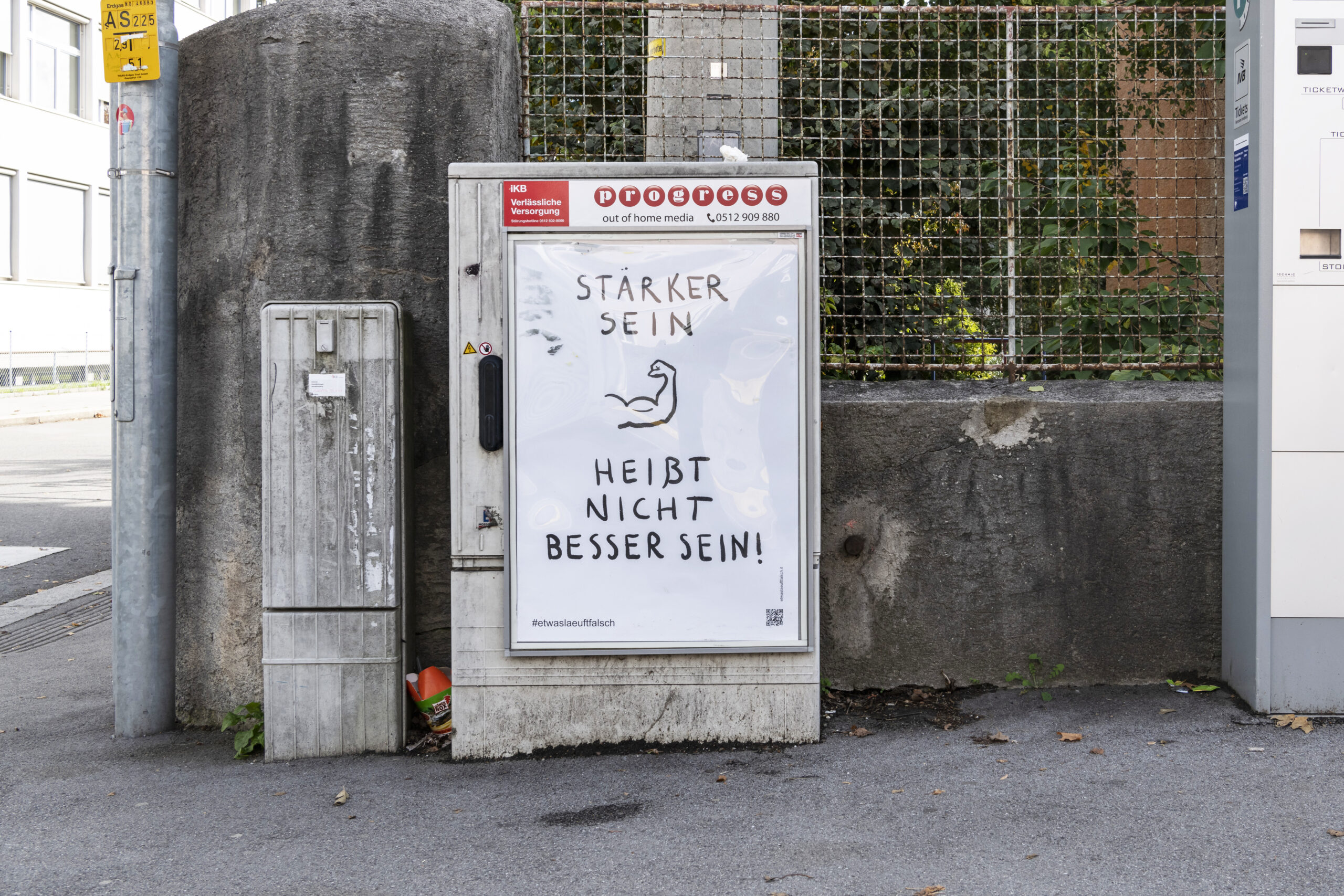
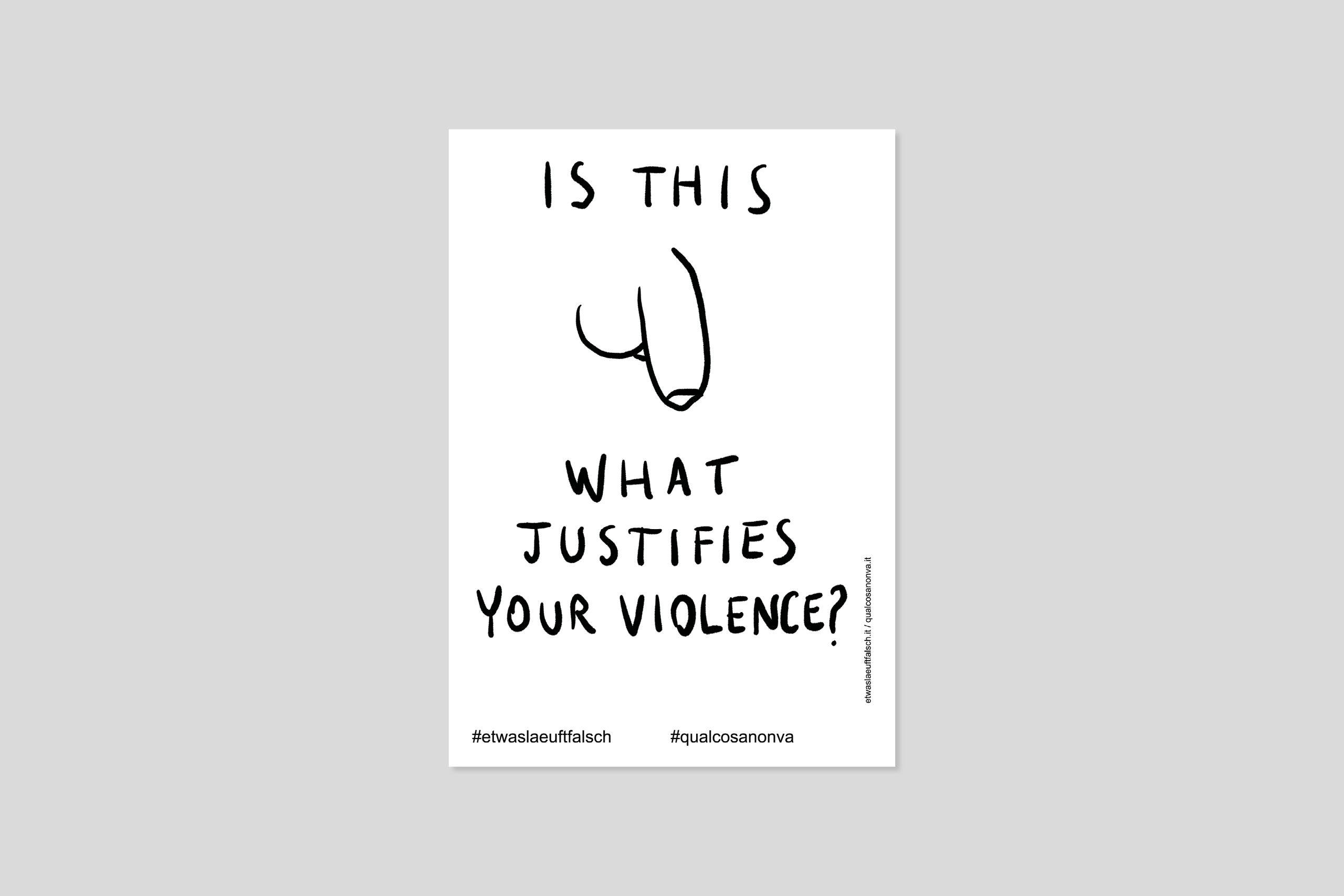
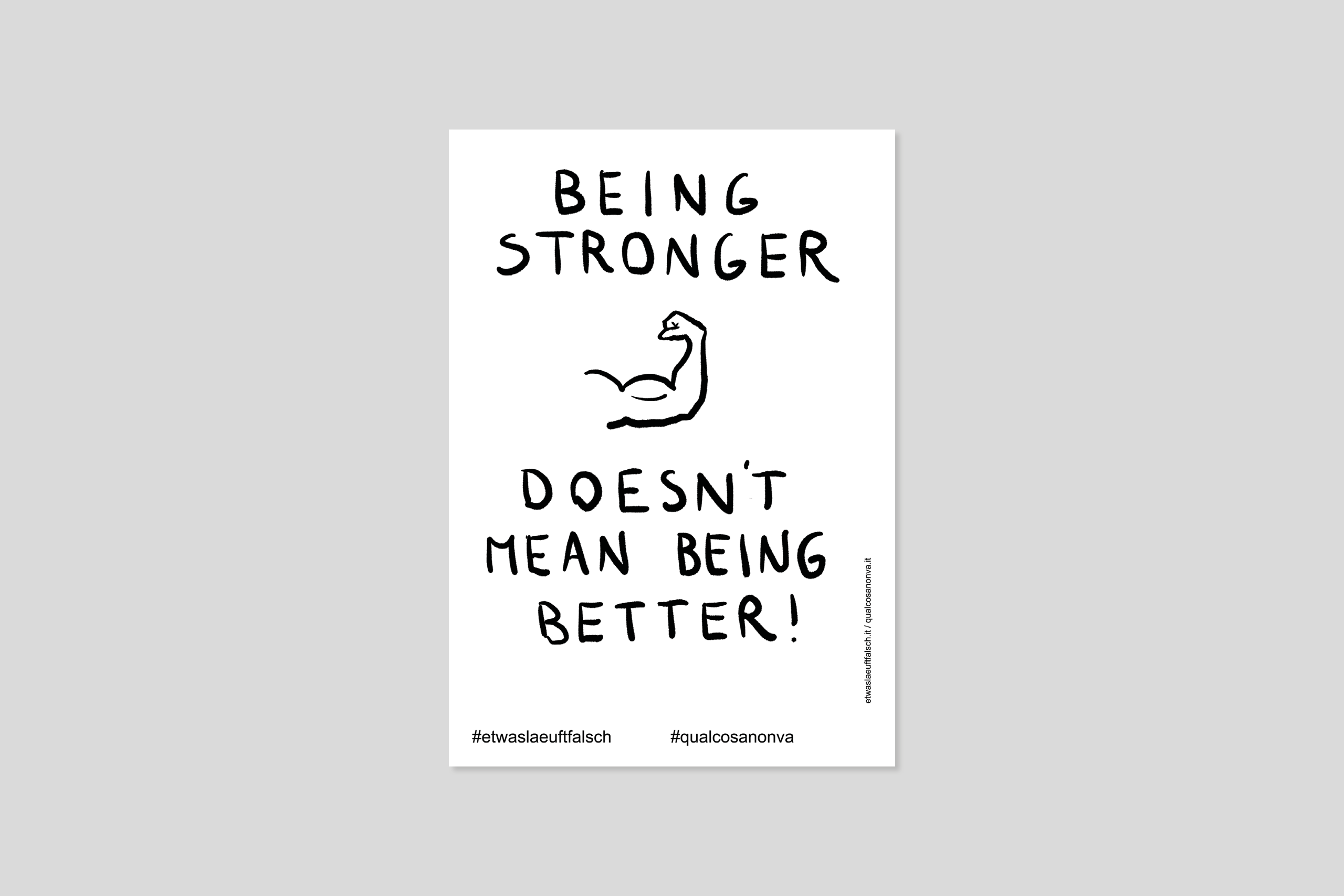
The poster series “In your face” by Aldo Giannotti addresses the power relations we are confronted with every day: gender and brawn. The drawings and handwritten messages are without filters and provoke with questions of what it means to be strong and whether gender can justify violence. But the posters also question what strength means (and can mean), and how much strength goes hand in hand with responsibility. When do we define ourselves by our gender? And when does it become an instrument of power? How do we want to use our power? When do we believe we need to be strong? The direct language of the poster series opens up a multitude of questions, it makes (sexualised) violence visible and comprehensible in images. The posters dismantle symbols and stereotypes that we would like to counter in our everyday lives, while at the same time giving us the feeling of being trapped precisely in these stereotypes.
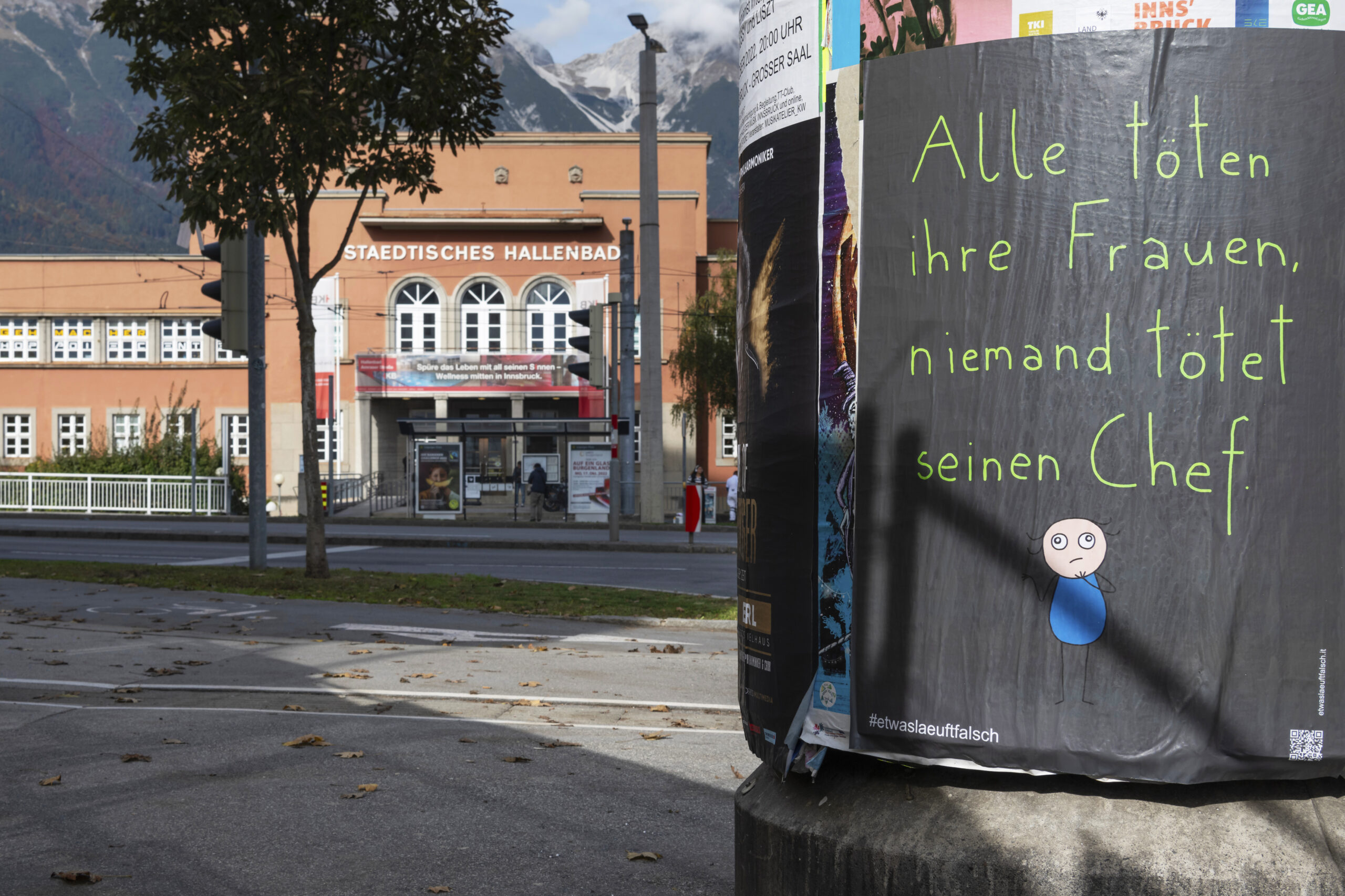
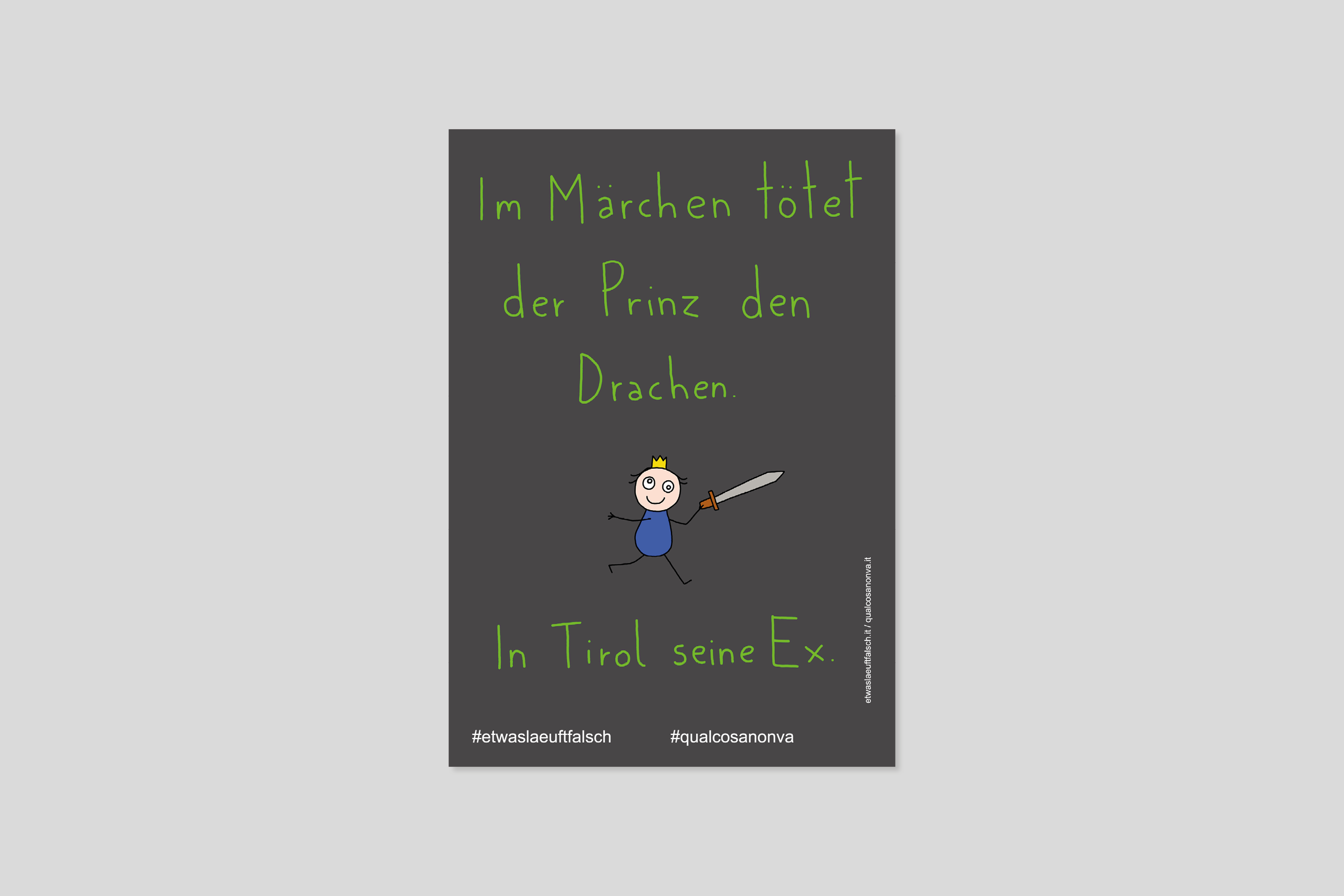
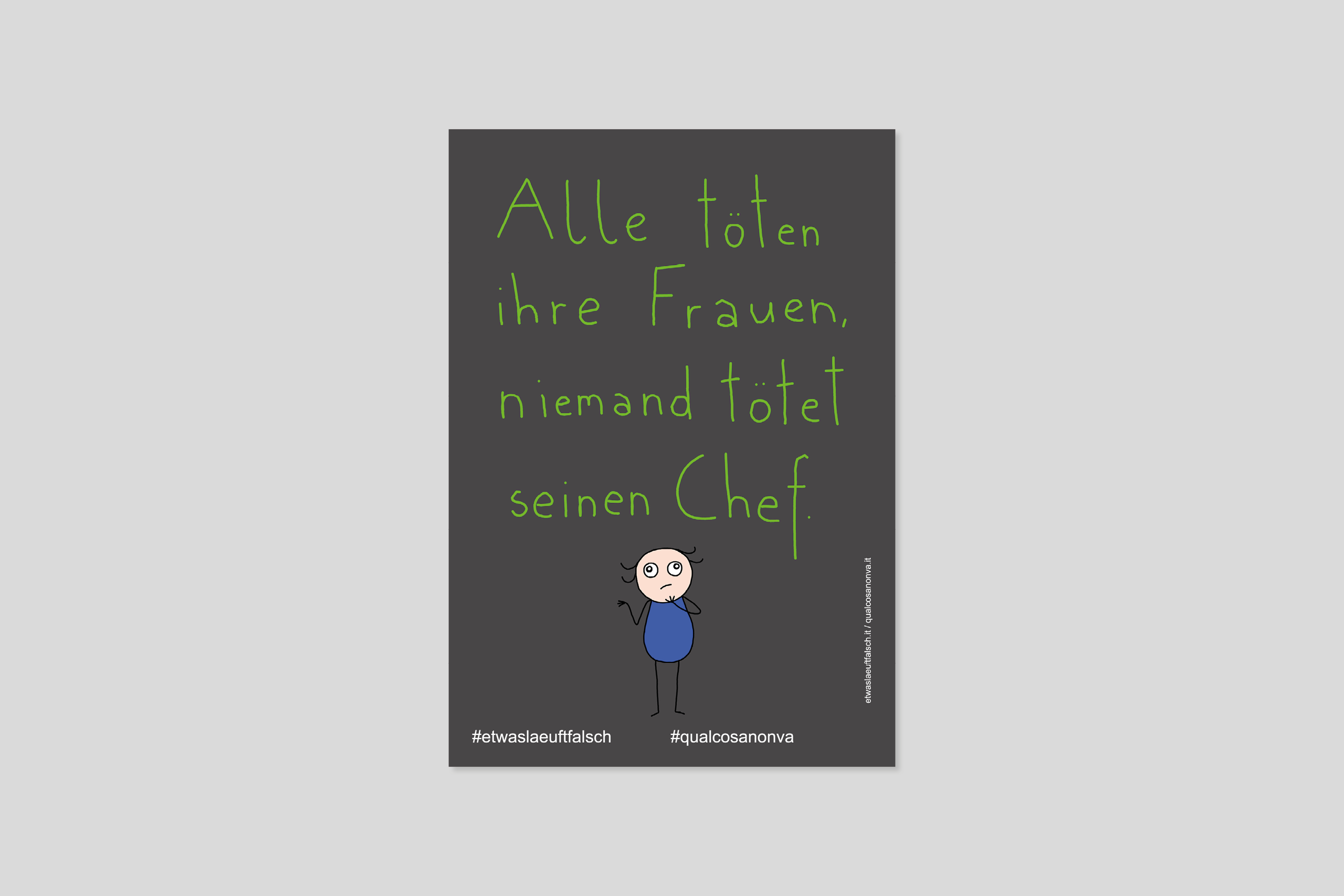
Stefanie Sargnagel’s poster series is clearly dedicated to the issue of femicide. In doing so, she draws attention to the hierarchies that are hidden behind acts of violence. Violence against women is often a result of accumulated frustration that is discharged against a (seemingly) weaker counterpart. The allusion to a Tyrolean legend situates the campaign and at the same time captures another reality: many relationships start out as fairy tales before they tip over into the very opposite.
Just as in the visual language of her posters, the contexts of the acts of violence are more complex than they appear. Ultimately, the series highlights the inequalities in our society. With dry humour, she addresses the underlying theme of power in a way that makes our laughter stick in our throats.

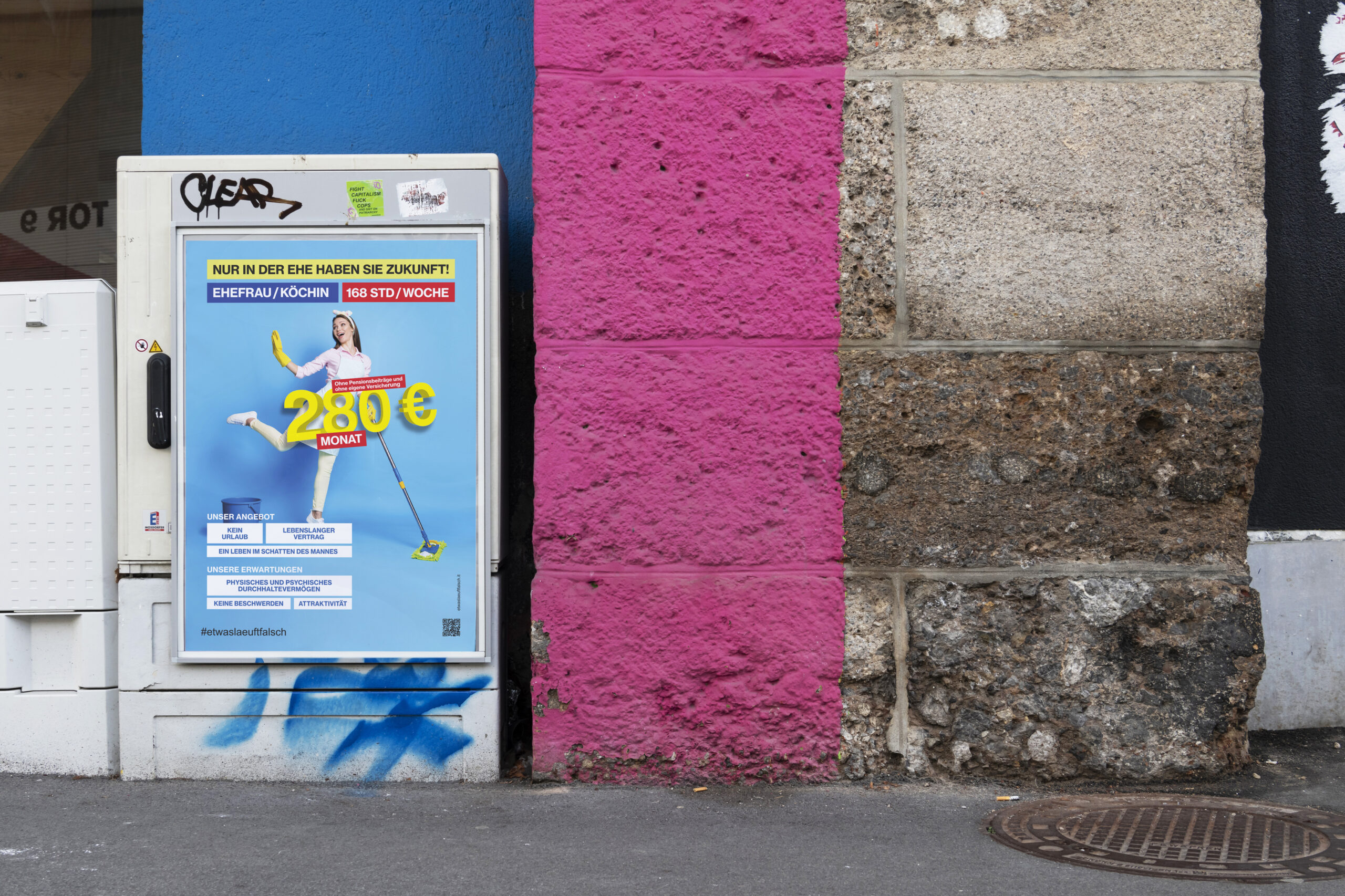
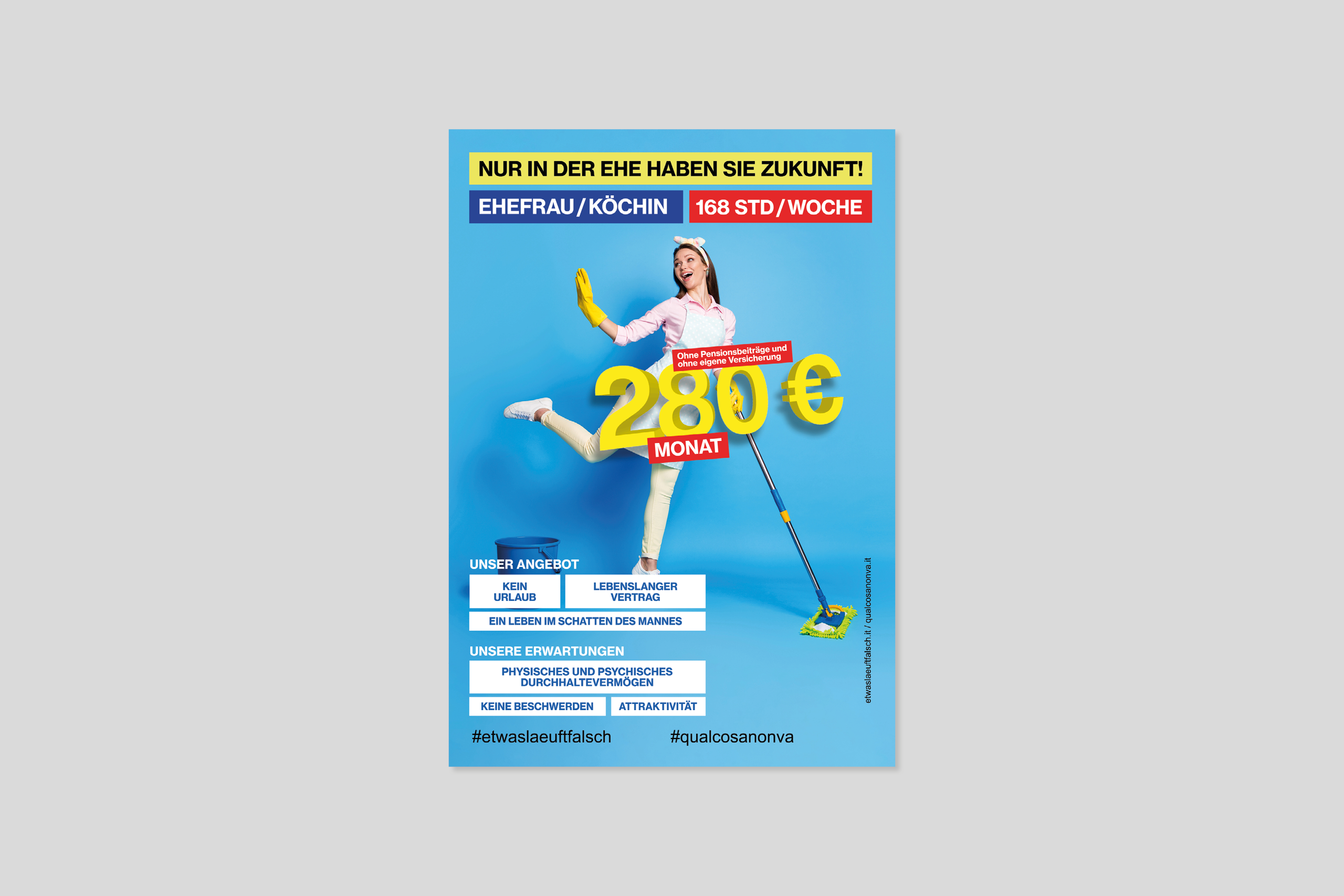
Kateřina Šedá’s poster draws inspiration from job advertisements as well as visual elements from advertising language. However, the apparent ad “seeks” and “offers” requirements and opportunities that reflect inequalities between women and men.
The poster reflects the patriarchal system in which our society has been firmly anchored for many years and which still dominates our everyday life – work, social life and partnerships. It addresses those gender inequalities that we far too often accept as given and unchangeable. But the roots of violence lie exactly there: in a society that is not built on equality. Physical violence usually comes at the end of a myriad of violent crimes – both psychological and emotional.
Kateřina Šedá opens up the topic of violence against women and refers both to entrenched and traditional role models along with the often gender-specific dependency and its fatal consequences.
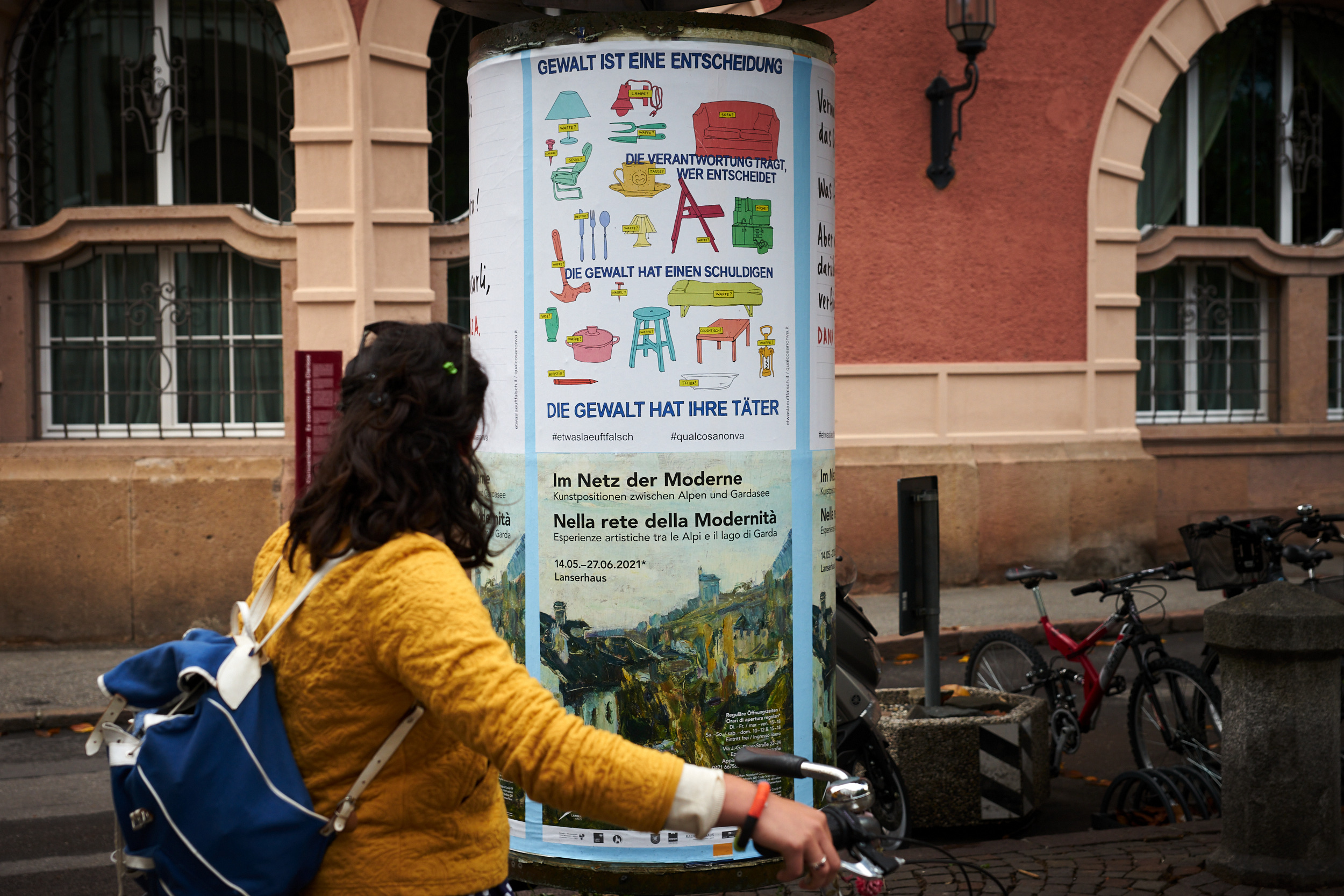
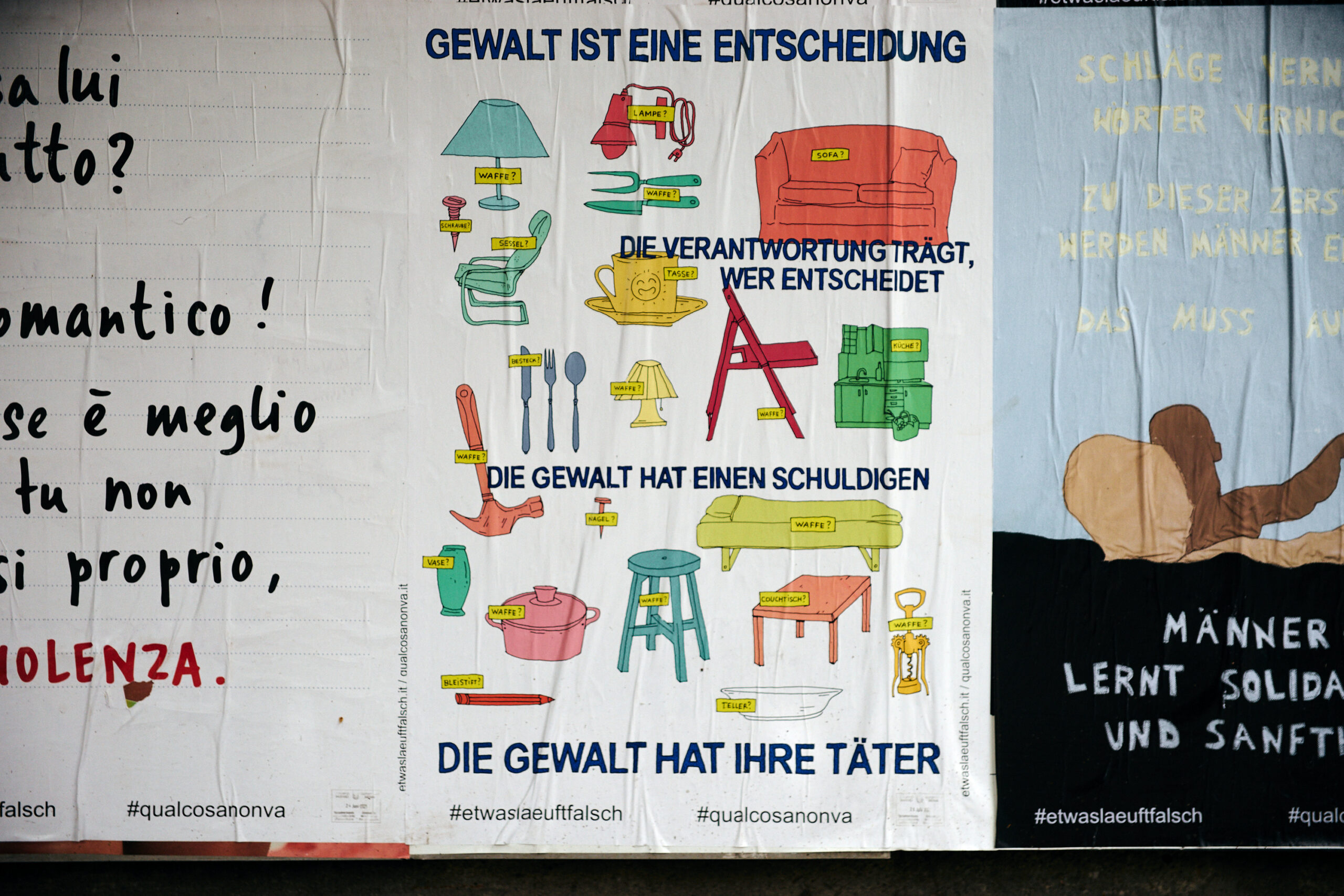
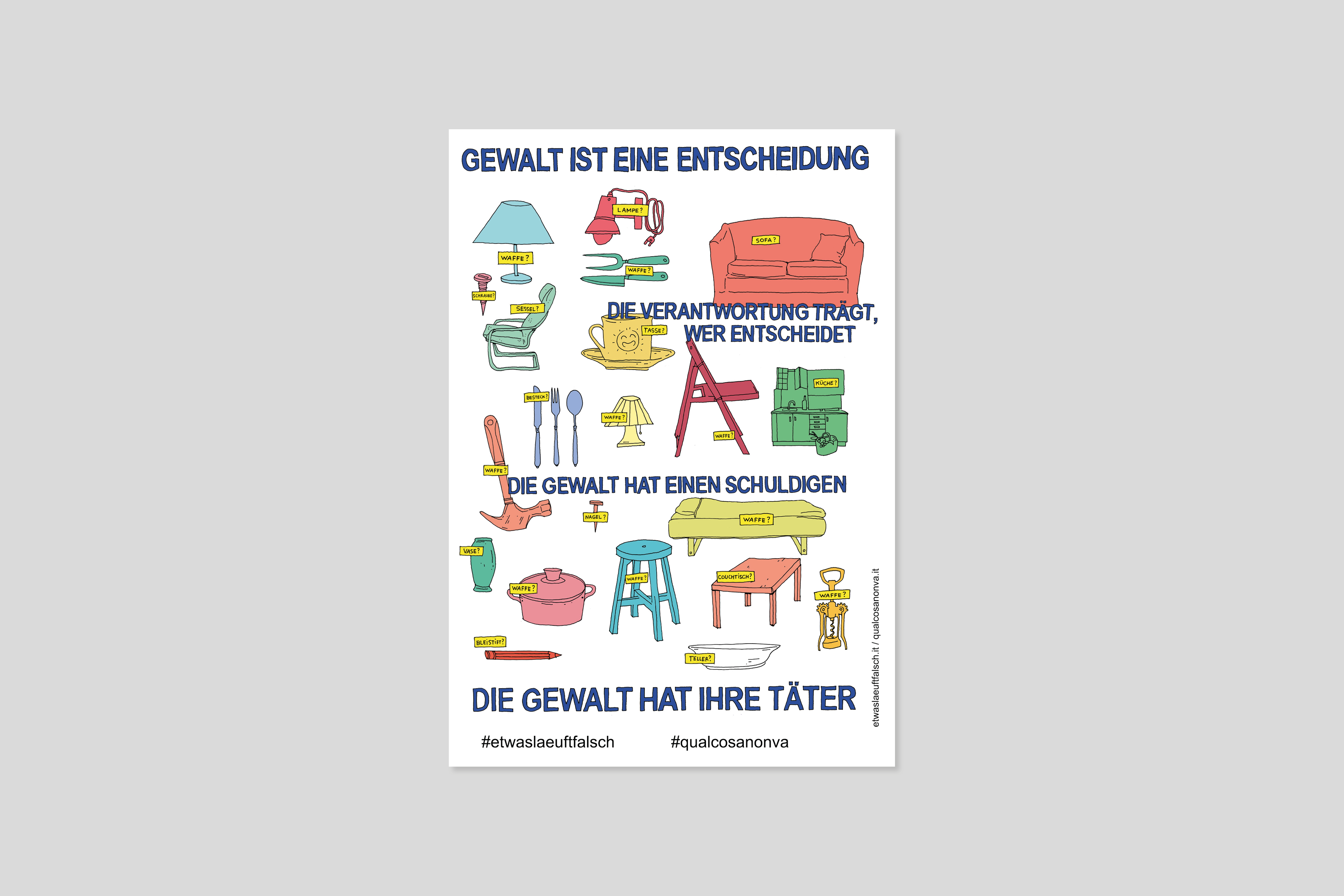
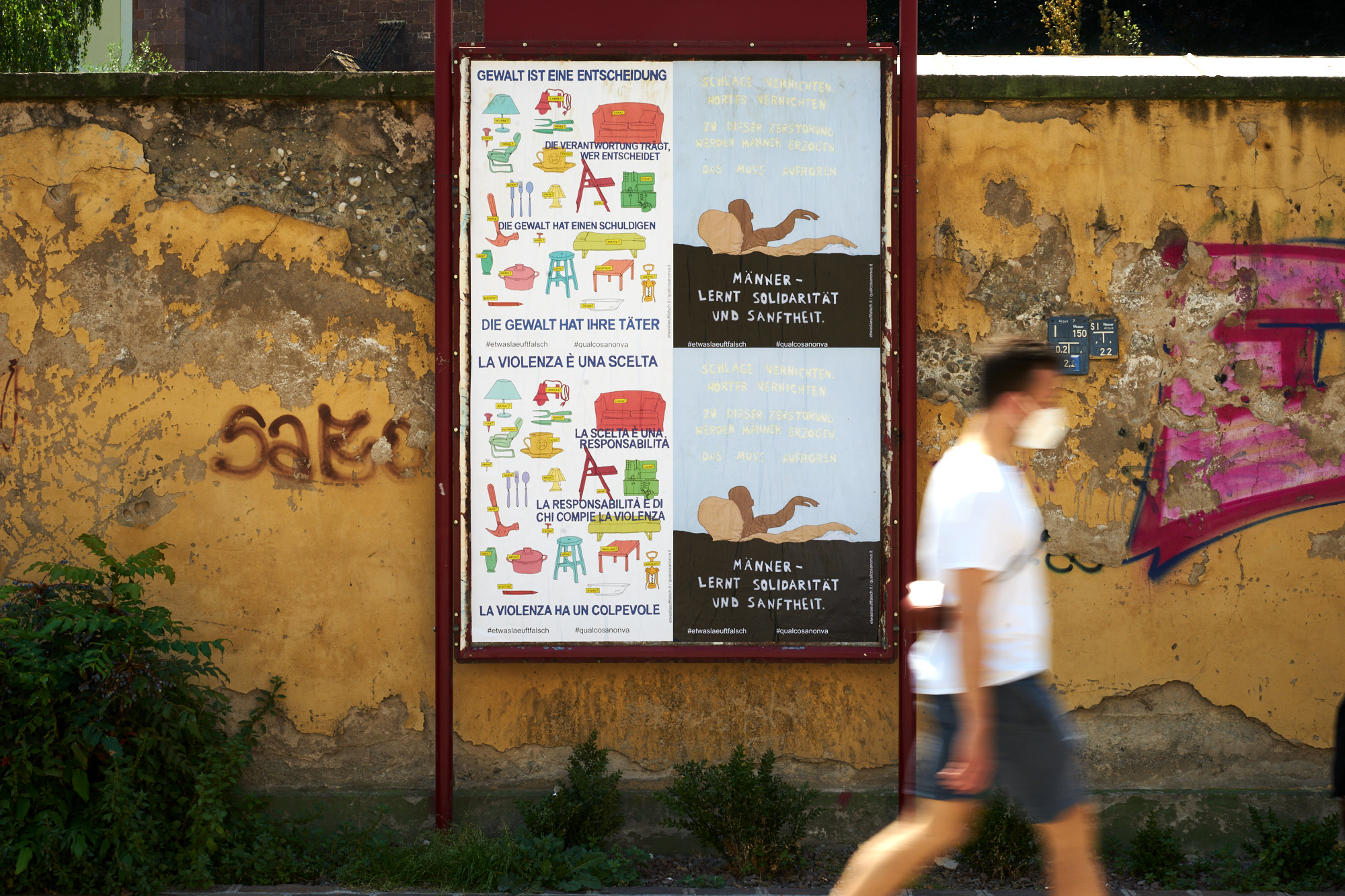
When we buy objects and materials to furnish our homes, we might not be ready to imagine that even a cup can become a weapon to be used against us. Domestic violence uses the most creative energies and the most absurd excuses to legitimize itself: Aggression, jealousy, disobedience, betrayal, conflict. Household objects are often the only witnesses to the patriarchal systemic violence that operates its uncontrollable savagery in private. It is important to recognize that violence is a choice, not a consequence, and that whoever chooses violence bears the responsibility. Among the most difficult obstacles for survivors to overcome is without doubt the guilt of having denounced or rebelled against physical, psychological and/or emotional violence. The poster is meant to show violence in its brutal normality.

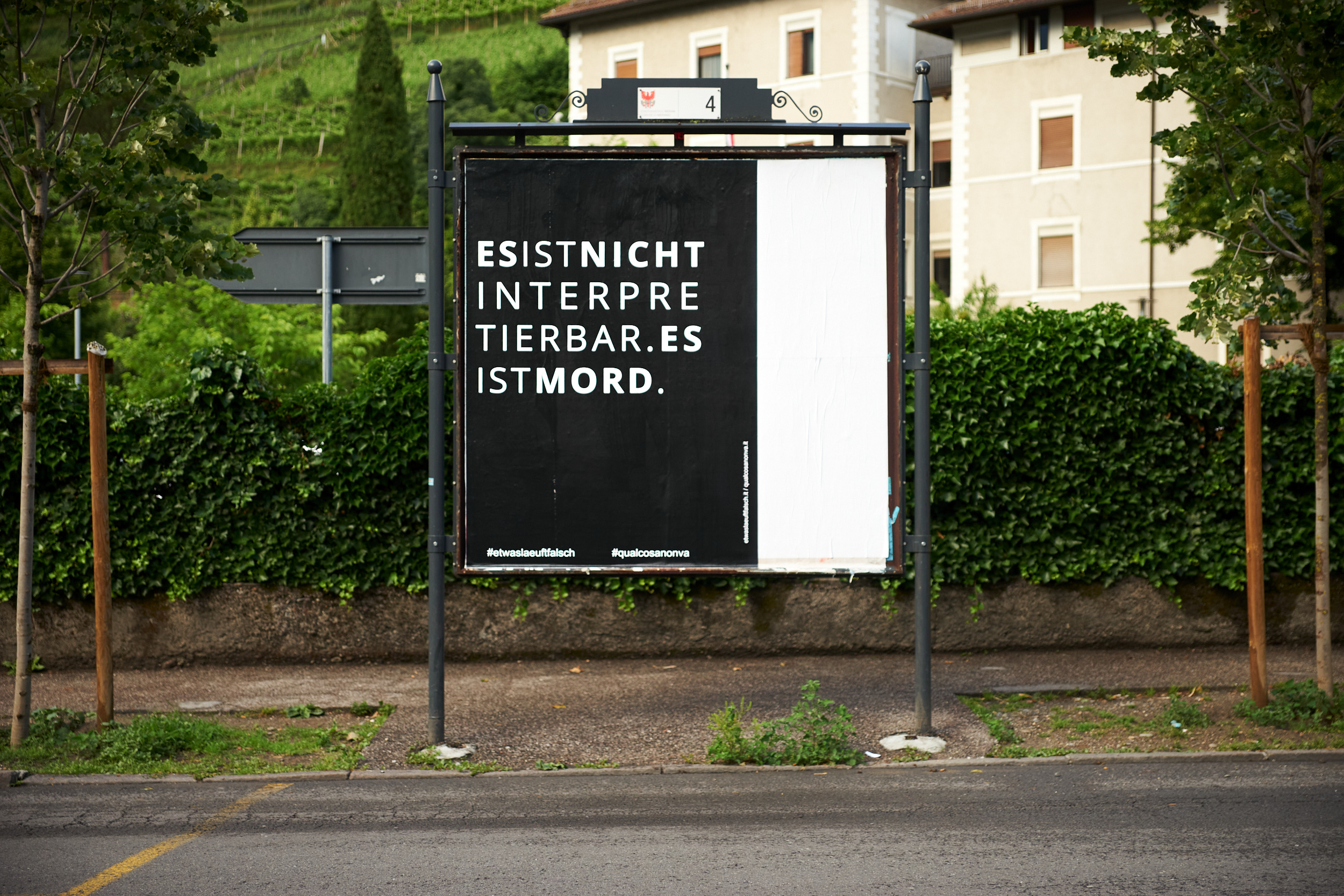
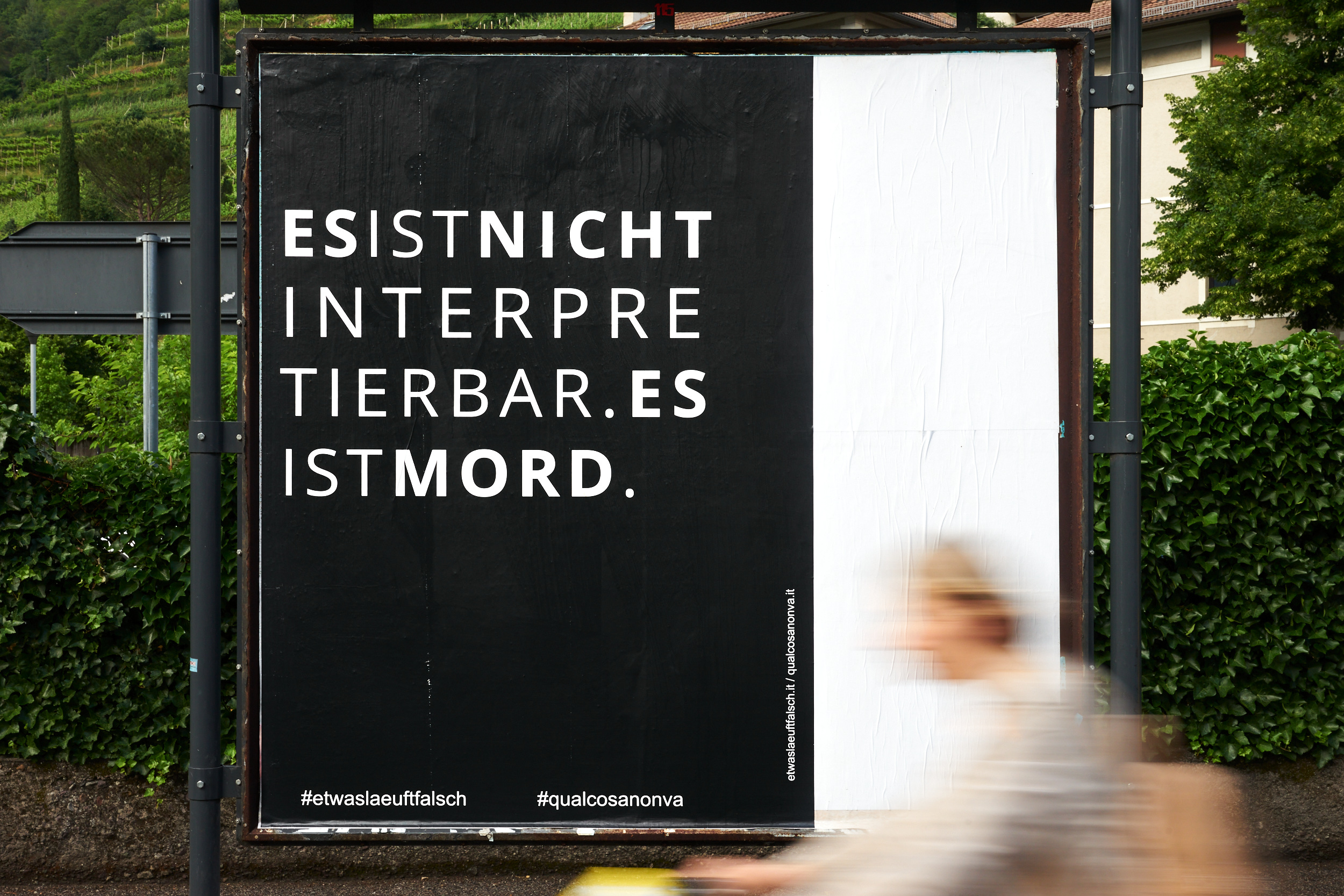
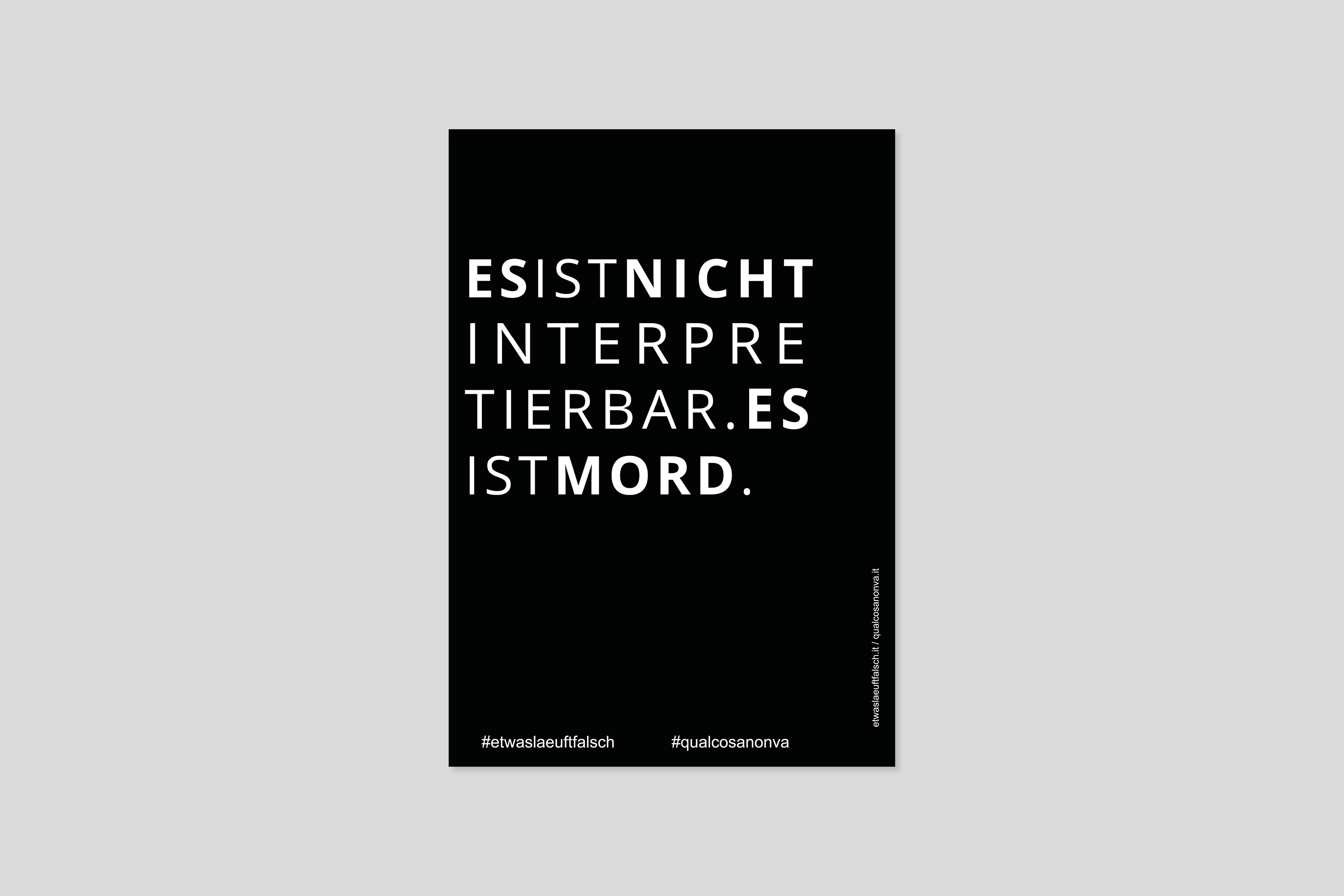
The question is raised as to what it means to interpret events in a society and to formulate them accordingly. We ask ourselves this question every day in our artistic work. Who interprets what, in which way, and what forms of violence lie in a fixed narrative, default, or interpretation. What does it mean when the murder of LGBTQI* people is allowed to become a field of interpretation, and how does this subsequently impose additional forms of violence on an act of violence. Is every interpretation equal to violence, and where does art find its place in this? Murder cannot be interpreted. Just as everything that cannot be interpreted also means its absolute extinction. In nothingness there is nothing to interpret.

In 2017, 87 000 women and girls were murdered worldwide. During the pandemic, violence increased by around half, that is by approximately 50 %, and in some countries by more than 70 %. Nothing about this is normal. Yet, in the fight to stop violent crimes against women, the fight against normality seems to be the greatest. We must dare to look at these figures. Until the veil of normality crumbles into ash. Until the terror and the horror awaken. Until the eye for reality awakens. And with it empathy and solidarity. And finally, the decision to act and change.
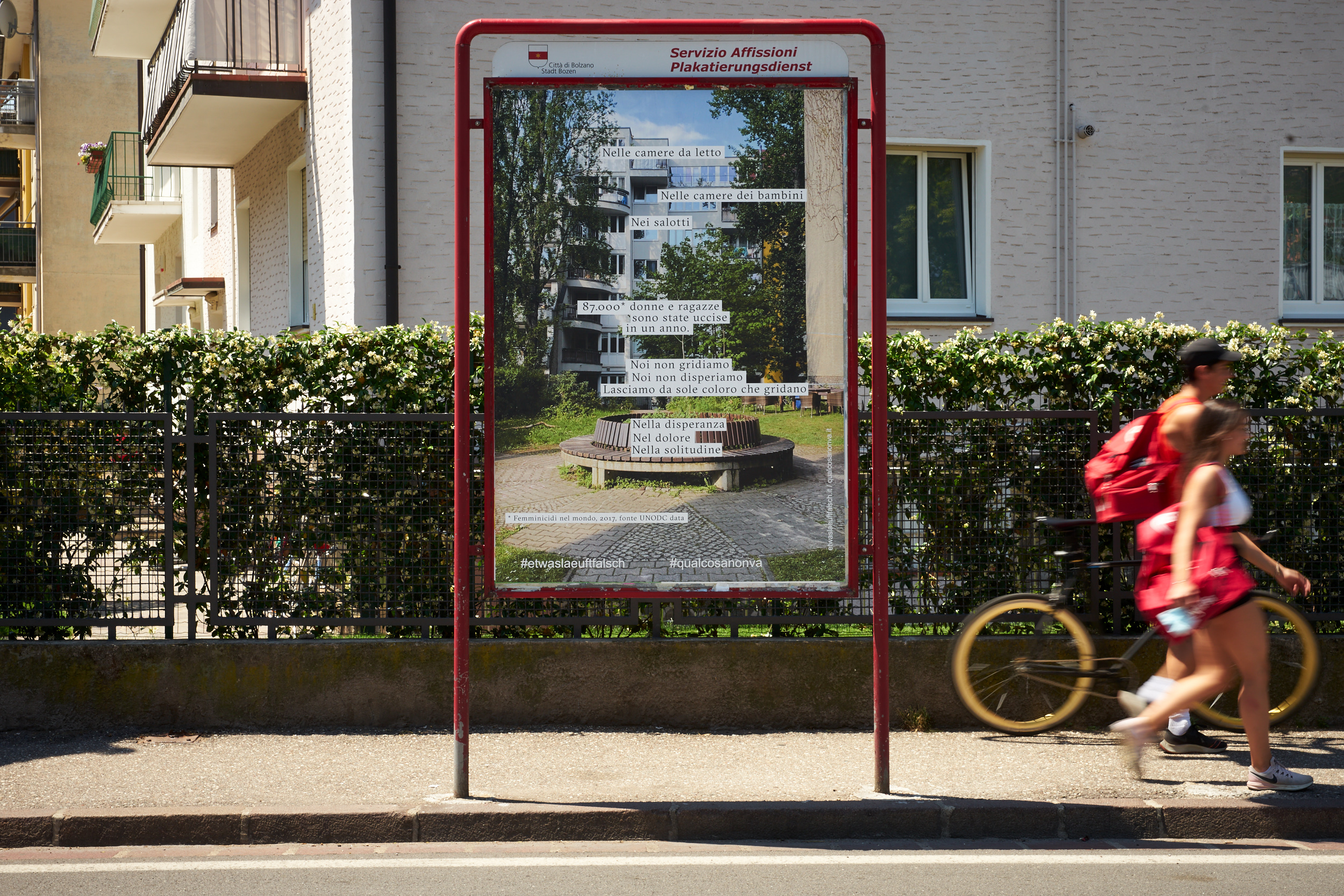
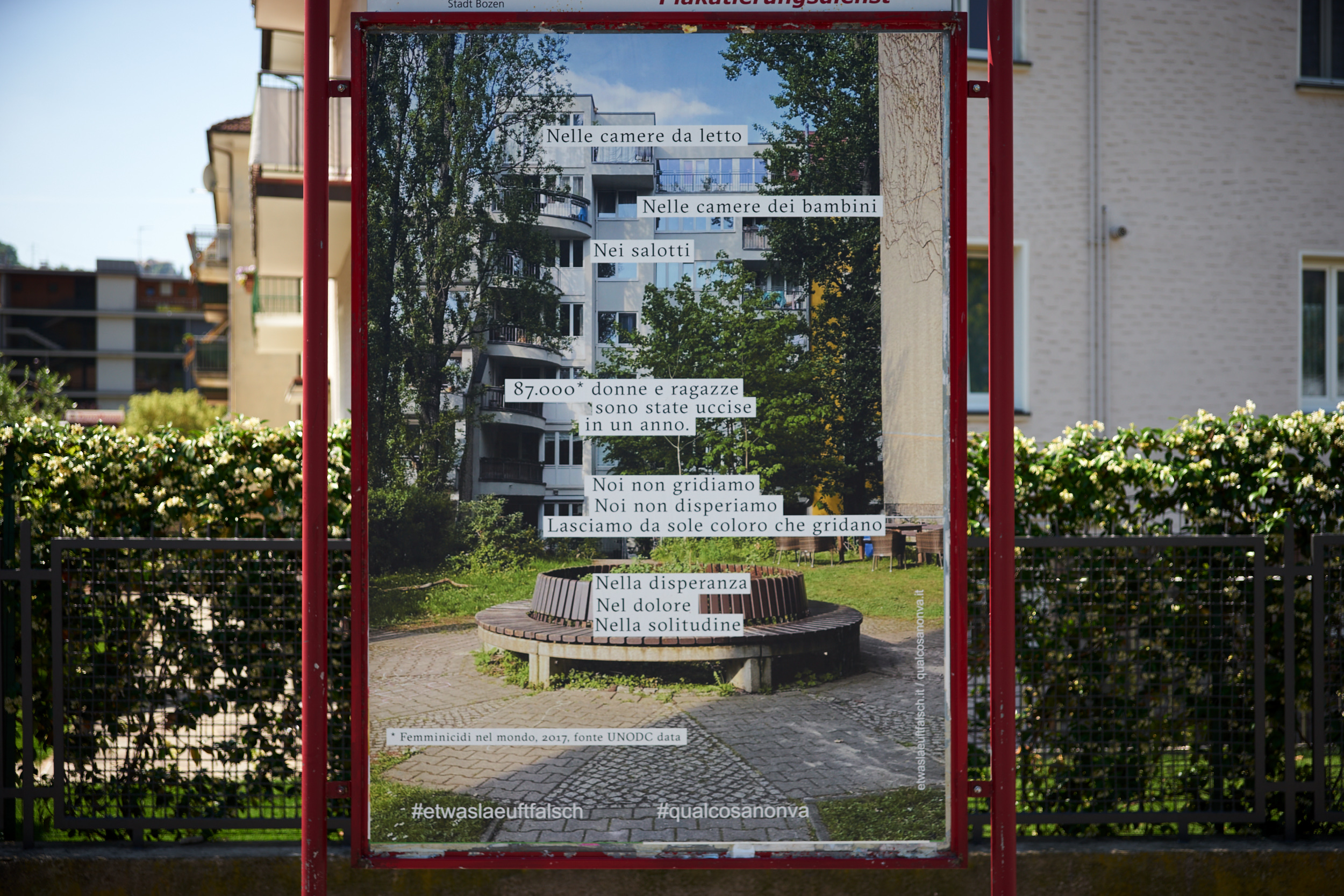
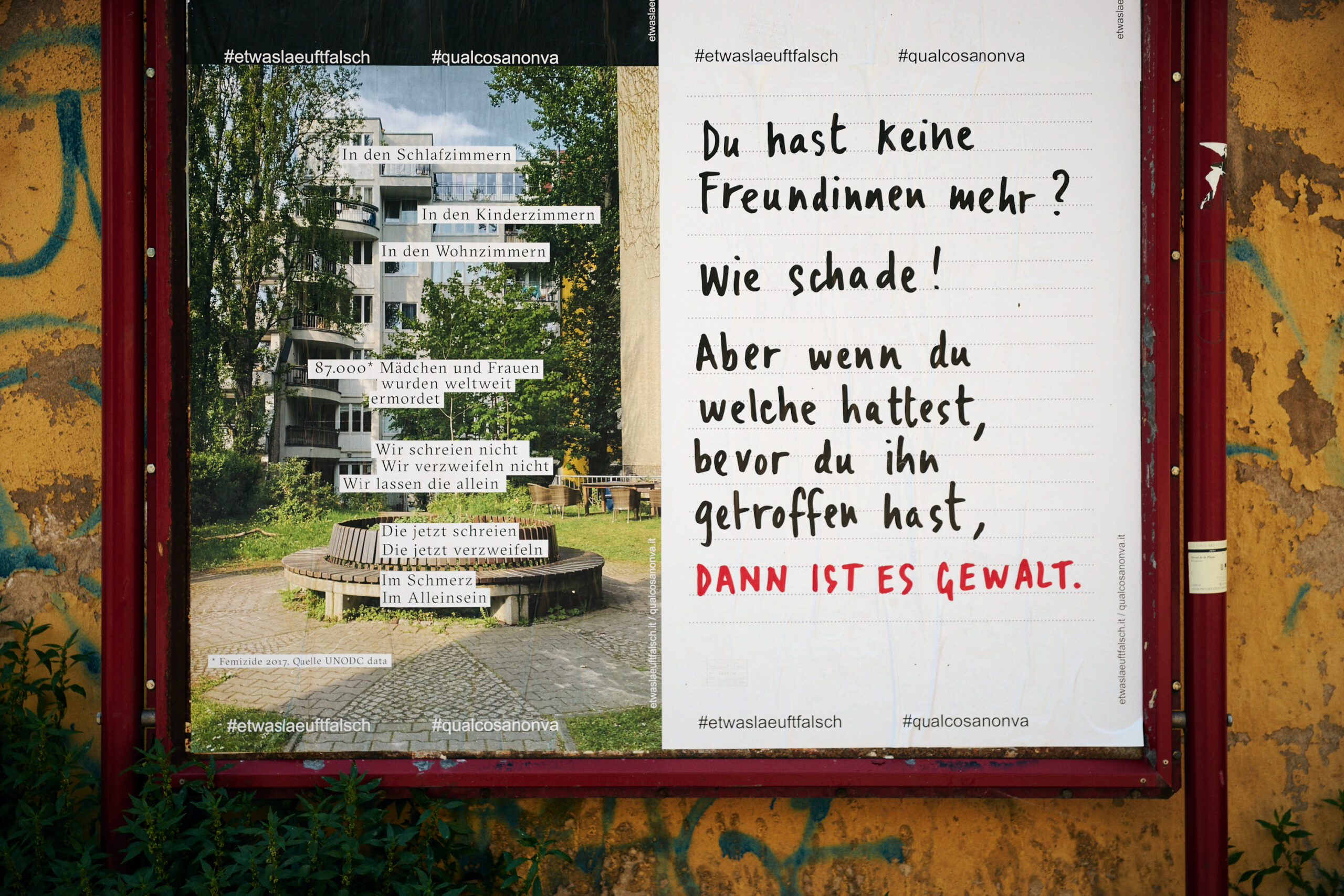
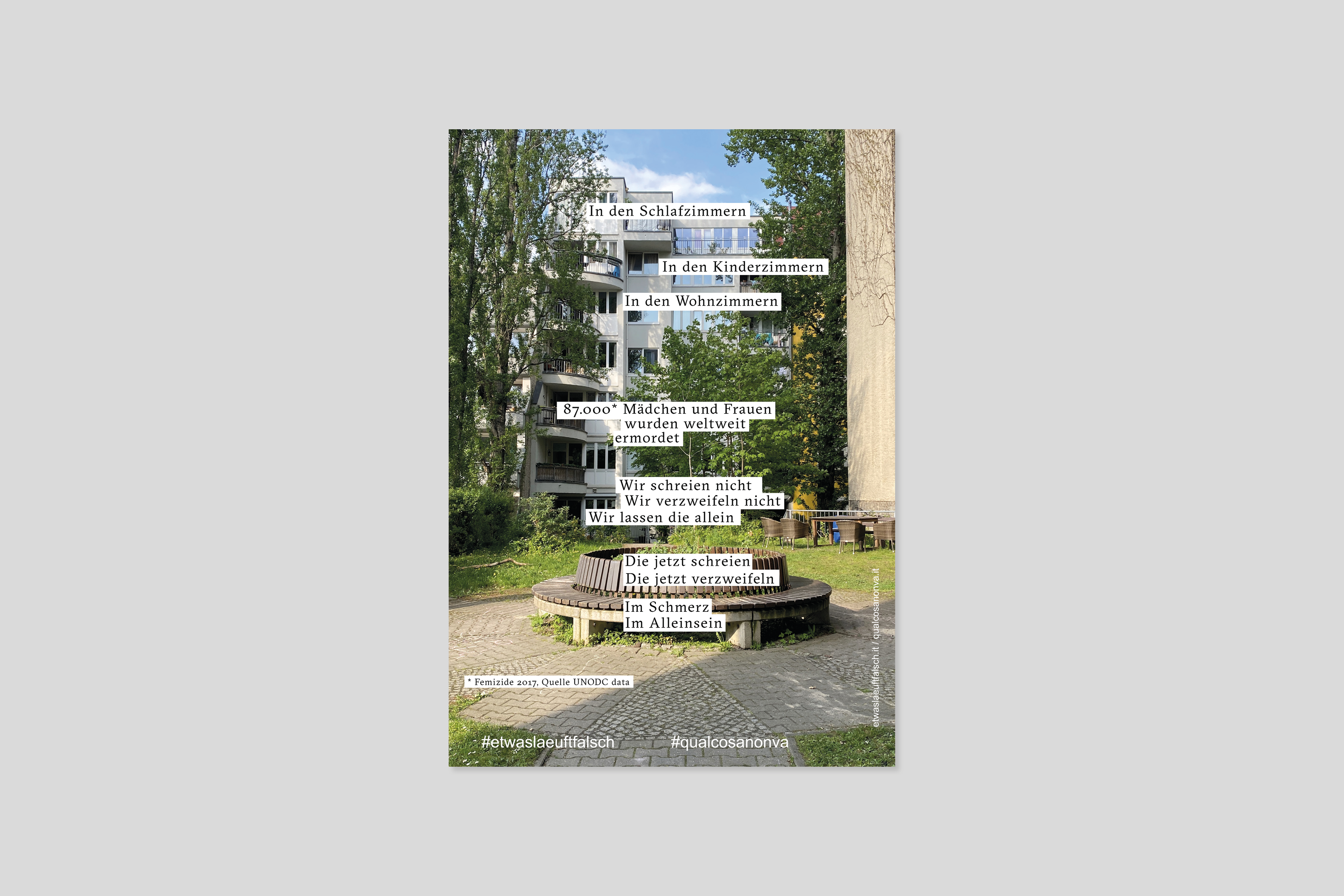
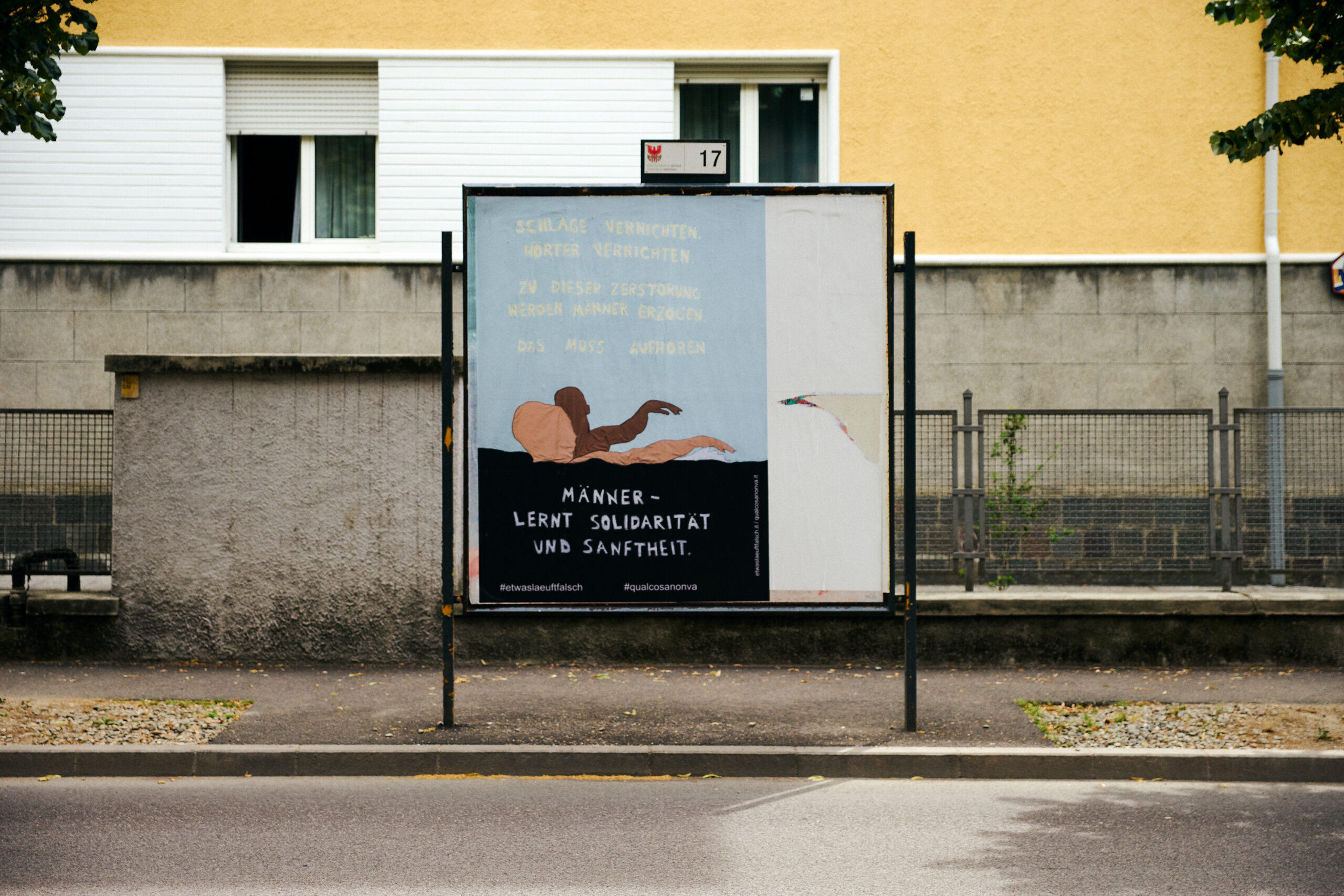
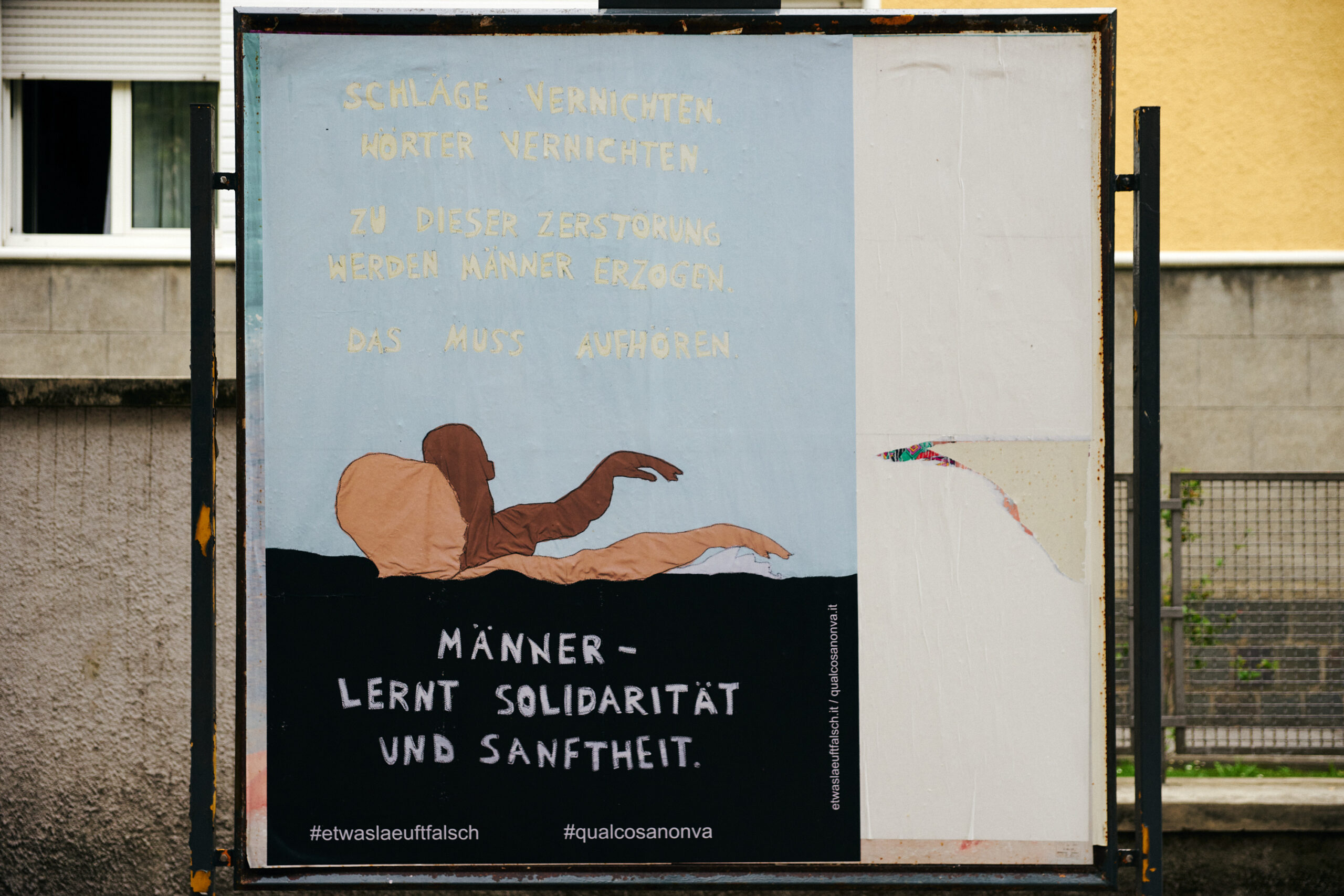
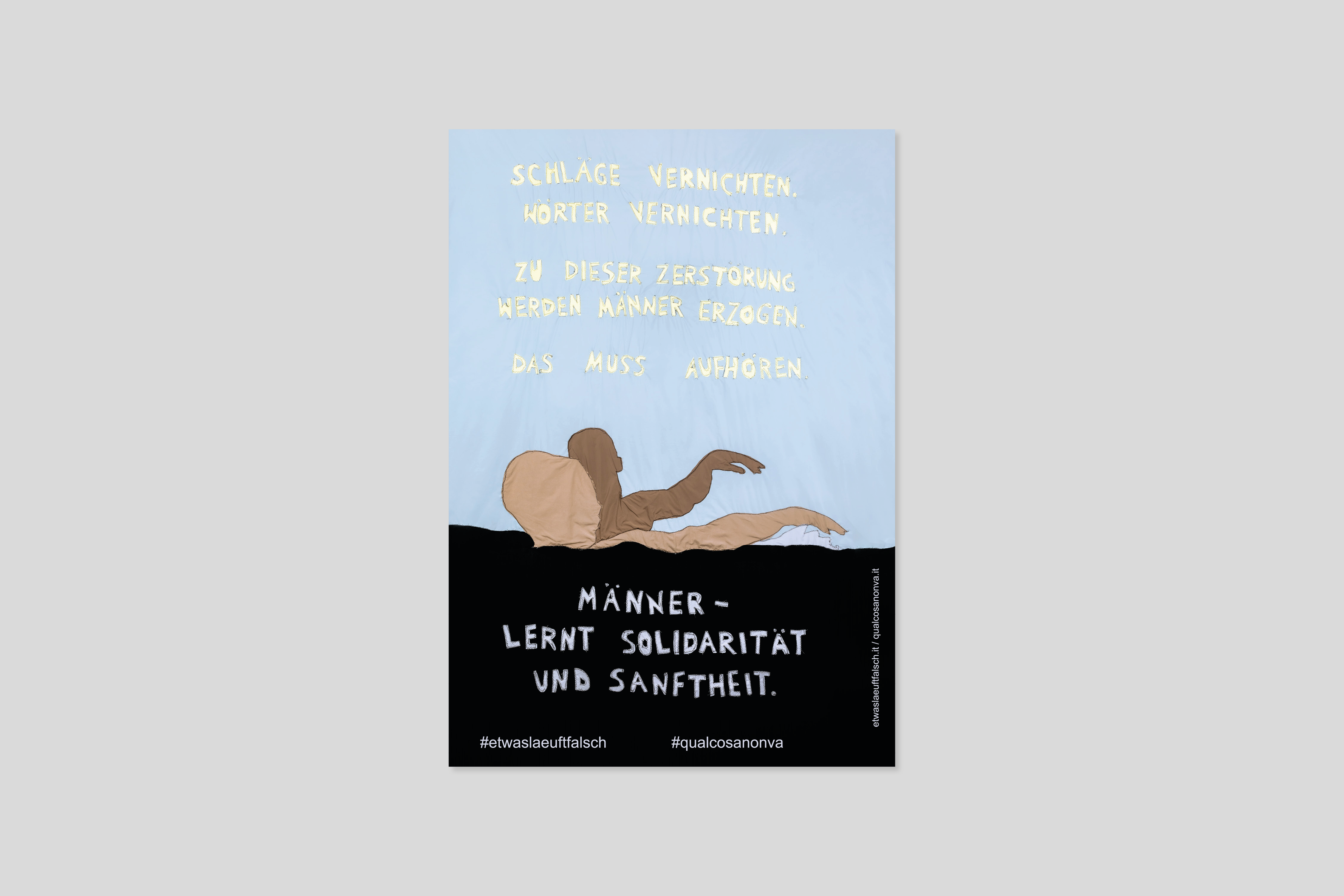
In their poster, both Utikal and Senthuran Varatharajah address the violence of patriarchy, from which men benefit but also suffer. There is no question: men are raised to be violent from an early age. This violence is primarily directed against women and gay people, but also against men themselves. The poster wants to call for its end. To solidarity and gentleness.
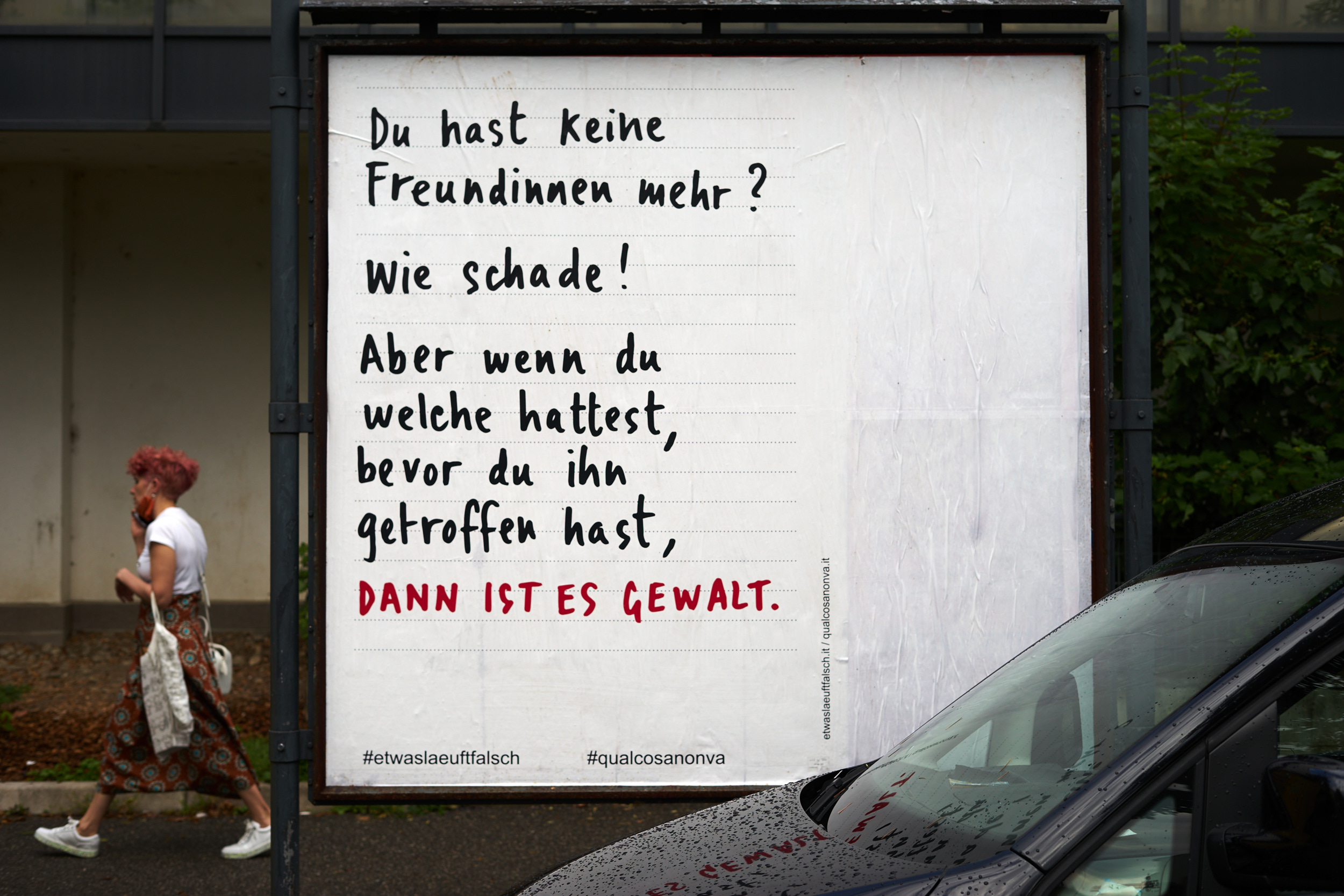
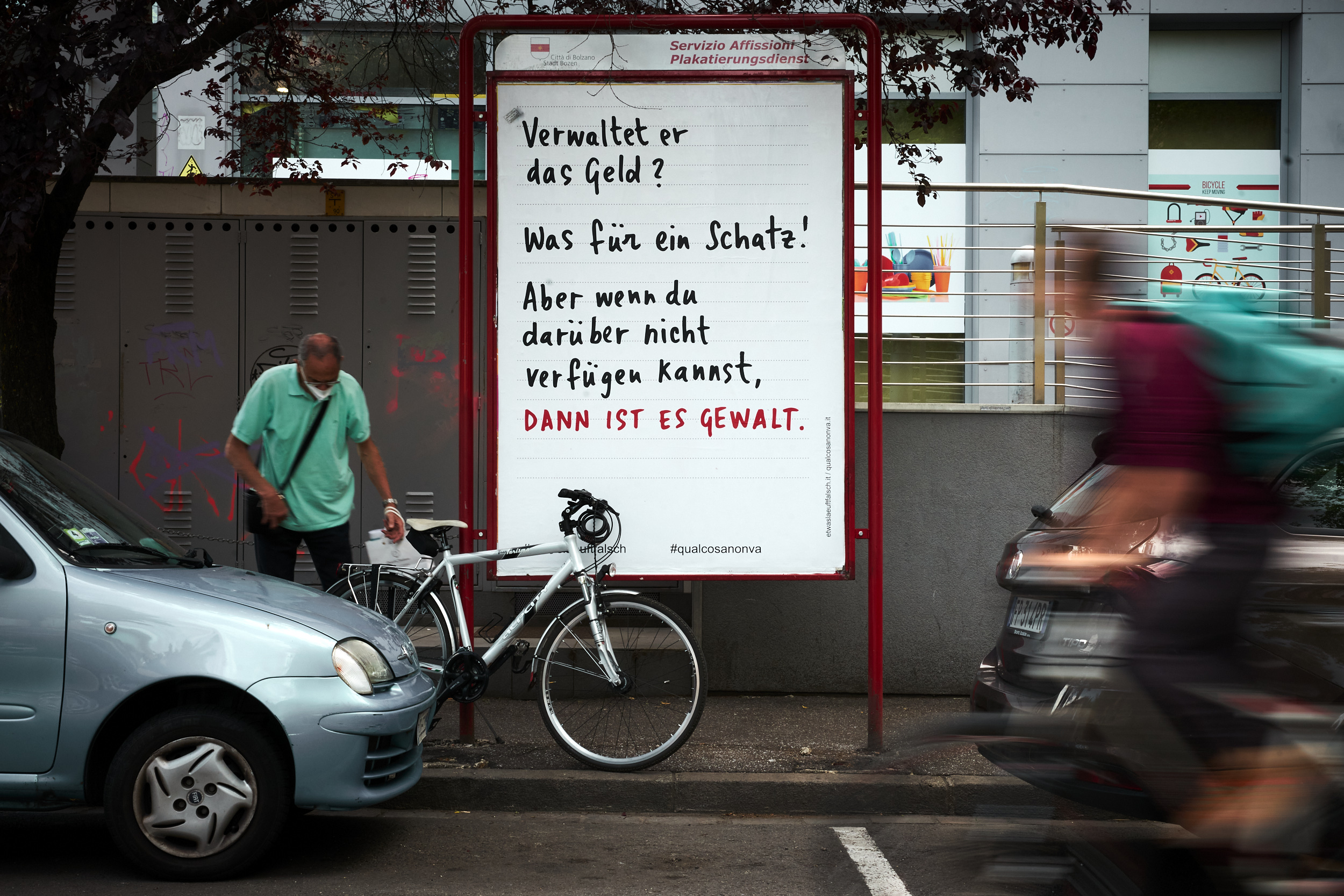
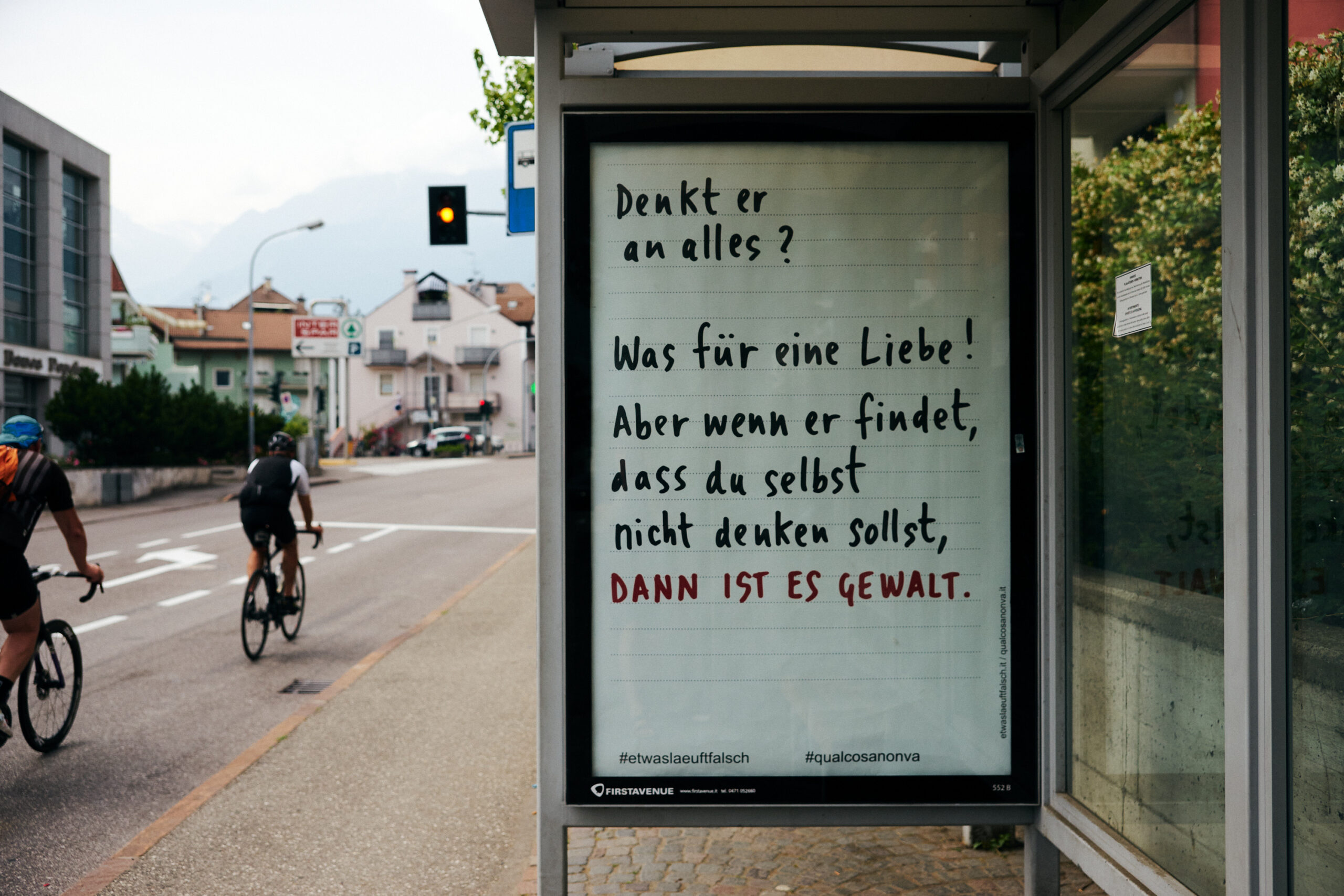
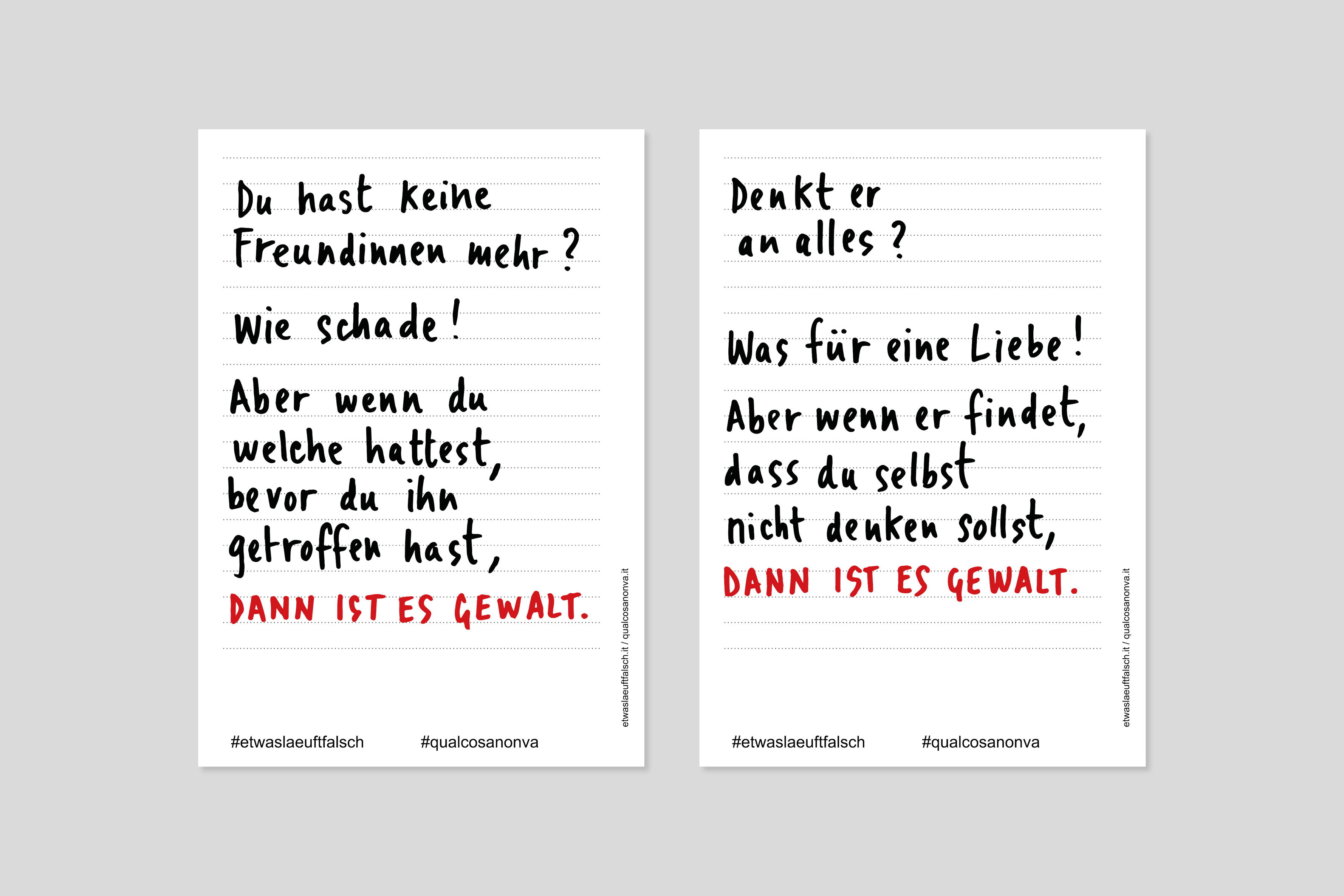
Physical abuse is not the only manifestation of violence. It is simply the most visible form, which distracts us from acknowledging the numerous other symptoms of psychological harm. Between spouses, violence is often disguised through habits, innocently performed, yet designed to control women, limiting their agency by repeatedly diminishing their sense of self, isolating them from support systems, thus encouraging toxic financial and emotional dependency. We blame and question women who feel unable to leave abusive partners, rarely identifying why they are compelled to stay. This series of posters draws attention to several red flags within relationships often dismissed because we do not recognise them as inherently abusive, especially when we conflate violence as an extension of love.